Calibro Studio · Saturia Studio · Growth and AI transformation advisor · Nov 2024 to present · Remote
The operating platform for a 24-brand communication studio.
The AI part was the easy part. Mapping how the studio actually worked, decision by decision, was the work.
At a glance
accounts run by one person
With AI support
automated workflows
AI sub-agents
hours a week saved
Per person, operations time
- Client portals, automated billing, content calendar with approvals, Instagram publishing through the Meta API, metrics
- Built on Supabase, Make, Claude and Gemini models; from first diagnosis to deployed product
- Today one person runs the studio's 15 accounts with AI support, saving 8 to 12 hours of work a week
Context
Saturia is a boutique digital communication studio serving 24+ brands, run by a small team losing more than twenty hours a week to operations: contracts, billing, calendars, approvals, reporting and publishing.
Challenge
Give a small team the operating system of a much larger one, without adding headcount, and without breaking the way the studio already worked with its clients.
What we did
The diagnosis.
Before any tool, the work was mapping how the studio actually ran: every decision, every handoff, every place where a client waited for an answer. That map became the product specification.
The platform.
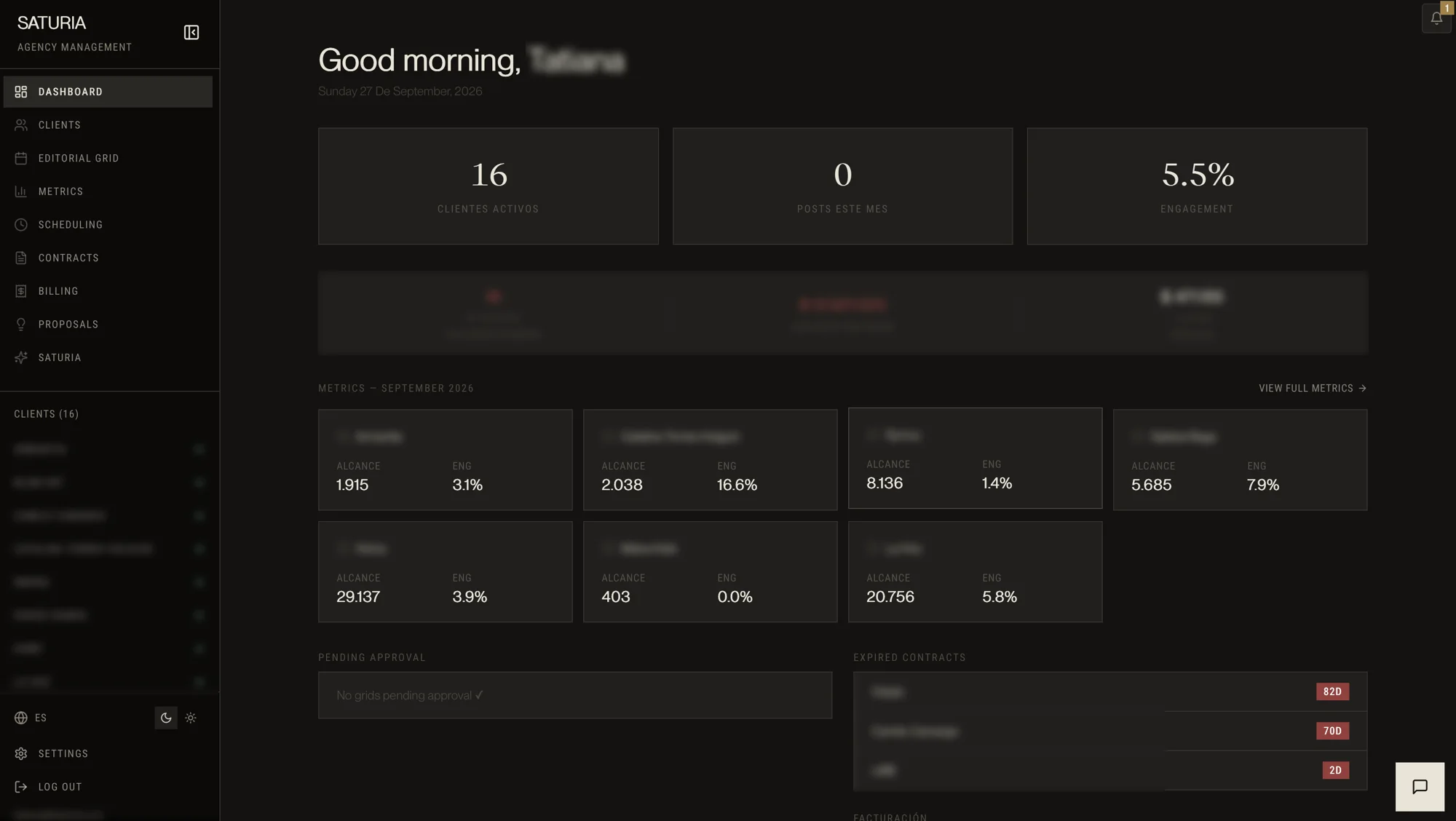
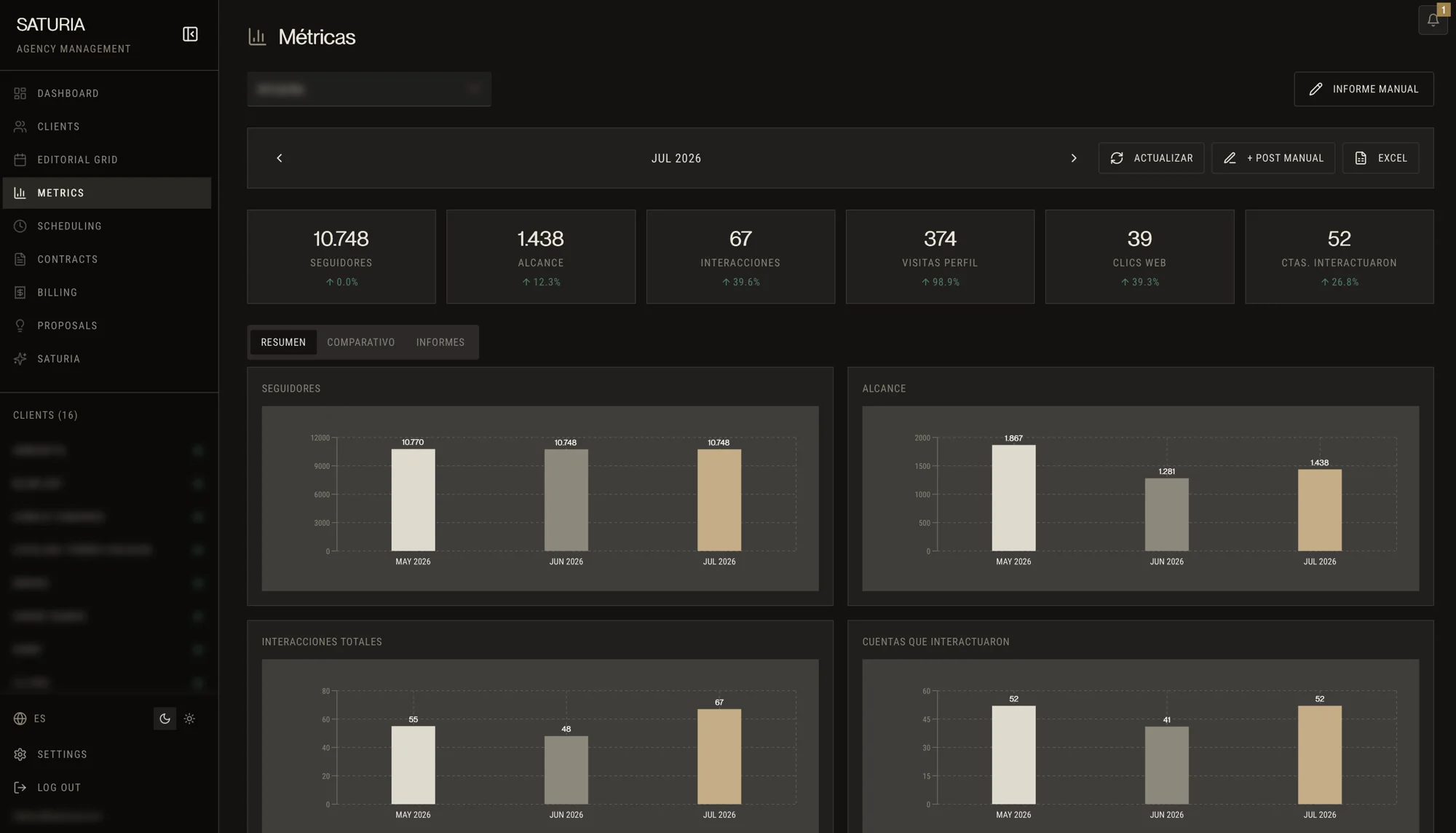
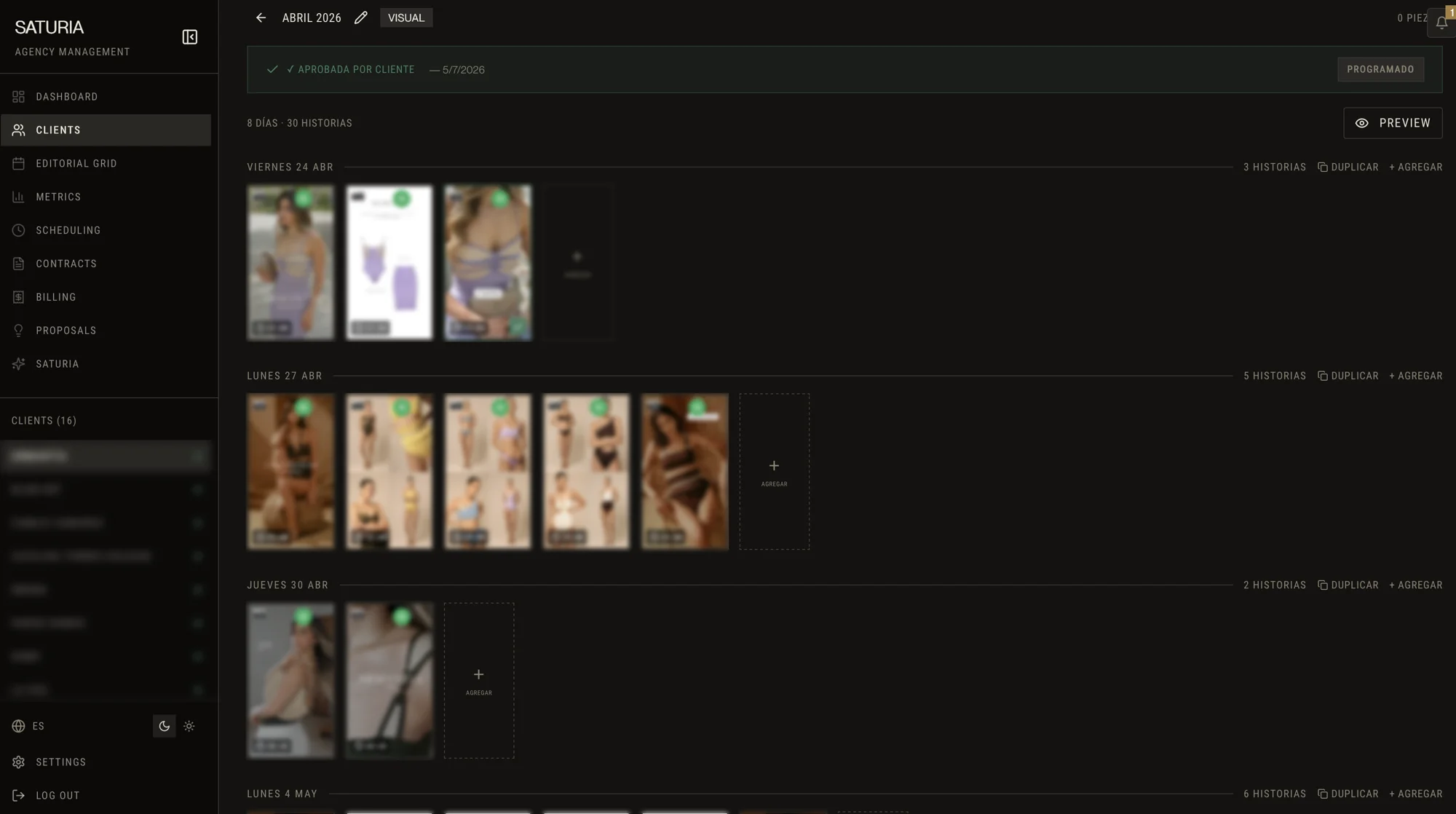
A client-facing operations platform designed and deployed end to end, fifteen modules: client portals, contracts, automated billing, a content calendar with approvals, and metrics. Every client sees their own work.
The automations.
Eleven automated workflows built on Make, so every routine step runs on its own: from onboarding and billing to the approval queue, scheduling and reporting.
The agents.
Six AI sub-agents built on Claude and Gemini models, each with one job, with a human approving the output before it ships. Instagram publishing runs through the Meta API, and every metric lands back in the portal on Supabase.
01 · Portal
15
modules
Contracts, billing, calendar, approvals, metrics. One portal per client.
02 · Workflows
11
automated workflows
Onboarding to billing, approval queue, scheduling, reporting. Built on Make.
03 · Agents
6
AI sub-agents
One job each, human approves the output. Claude and Gemini models.
04 · Publishing
through the Meta API
Every metric lands back in the portal. Data on Supabase.
Metrics feed the next calendar
The product · Saturia Hub
The platform, as the team sees it.
Three screens from the live platform, client data blurred. The dashboard the studio opens every morning, the metrics module for one account and one month, and an editorial grid approved by the client and scheduled for publishing.
What I learned
Automation only pays when it follows a real process. The studio's value was in its judgment with clients, so the platform was built to protect that judgment and remove everything around it. The AI agents were the last layer, not the first.
The AI part was the easy part.